

Amarone vs Ripasso, what's the difference? Ripasso is sometimes called 'baby Amarone,' which always makes me smile, because there's nothing small about what's happening in that glass. Both wines come from Valpolicella, just outside Verona. Both use the same three grapes. However, one costs roughly double the other, and they taste like distant cousins rather than siblings. So what's actually going on? Let's break it down properly.
Amarone vs Ripasso: Same Region, Same Grapes, Different Paths
Amarone della Valpolicella and Valpolicella Ripasso both rely on Corvina, Rondinella and Molinara, the local red grape varieties that give Valpolicella wines their signature cherry fruit and gentle bitter edge. Neither wine could exist without the other, either. In fact, Ripasso is made using the leftover grape skins from Amarone production, which is why people often call it Amarone's little sibling. Understanding how each wine gets made is really the key to understanding why they taste so different.
How Amarone Gets Made
Amarone starts with a technique called appassimento. Winemakers select their best grape bunches at harvest, then lay them out to dry naturally for months, often on bamboo racks or in ventilated lofts. As the grapes dry, they lose water and concentrate their sugars. Once dried, they get pressed and fermented into a wine that's rich, warming and high in alcohol, usually somewhere between 15% and 16%. The whole process takes patience, and the wine itself usually sees lengthy oak ageing before release, often two to three years.
How Ripasso Gets Made
Ripasso takes a shortcut to something similar. Instead of drying its own grapes, winemakers ferment a base Valpolicella, then pass it over the leftover skins and pomace from a finished batch of Amarone. This second fermentation, the ripasso, or "re-pass", pulls extra colour, tannin, alcohol and dried fruit character out of those skins. The result sits somewhere between a light, everyday Valpolicella and the full power of Amarone, which is exactly why so many people reach for it as an easier midweek alternative.
Amarone vs Ripasso at a Glance
| Feature | Amarone della Valpolicella | Valpolicella Ripasso |
|---|---|---|
| Production method | Grapes dried for months, then fermented | Base wine refermented on Amarone skins |
| Alcohol | Around 15 to 16% | Around 13.5 to 14.5% |
| Body | Full, dense, powerful | Medium to full, softer |
| Flavour profile | Dried fruit, dark cherry, spice, graphite | Fresh and dried red fruit, plum, gentle spice |
| Ageing | Long oak ageing, built to last | Shorter oak ageing, drinks well younger |
| Occasion | Special occasions, meditation wine | Versatile, easy midweek indulgence |
Two Bottles, One Producer, One Comparison
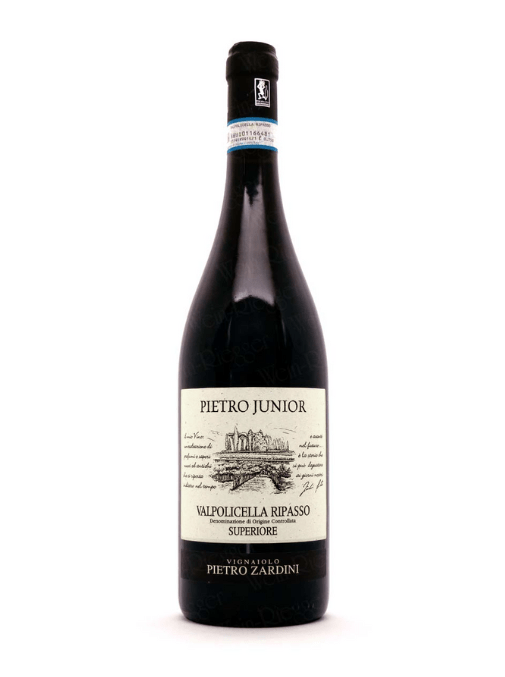
The easiest way to taste the difference between Amarone vs Ripasso is to compare two wines from the same producer, since it removes any guesswork about house style. I picked two from Pietro Zardini, a family that has worked the red and brown soils of Valpolicella since the 1600s.
Start with the Pietro Zardini Junior Valpolicella Ripasso Superiore. It's hand harvested Corvina, Rondinella and Molinara, gently macerated on the skins, then aged up to ten months in oak before a spell in steel for freshness. Expect mocha, black fruit and tobacco on the nose, with a smooth, full bodied palate that never feels heavy. It's a joyous, generous glass, and it works brilliantly with spaghetti bolognese, a cheese board, or roast pork loin.
Now compare it with the Pietro Zardini Amarone della Valpolicella DOCG. This is a different level of intensity entirely. Made from semi dried grapes and aged for around 36 months in oak barrels and barriques, it's austere, deep and powerfully structured. On the nose you'll find black cherries, warm spice, pepper, graphite and a touch of earthy humus. The palate is powerful, warm and persistent, so give it a decant before serving. It's the perfect way to finish a celebratory meal, and it's particularly special alongside a good gruyère.
Pour them side by side and the family resemblance is obvious, dark cherry, a savoury edge, real structure. However, the Amarone is deeper, richer and more serious in every sense, while the Ripasso stays approachable and food friendly. Same producer, same grapes, two completely different occasions.
Which One Should You Reach For
Reach for a Ripasso when you want something rich and warming without the price tag or the wait, alongside a Sunday dinner or a plate of pasta with a proper meat sauce. Save the Amarone for the nights that call for something special, a celebration, a cold evening by the fire, or a serious cheese board. Either way, you're tasting one of Italy's most distinctive winemaking traditions, just expressed at two different volumes.
You can find both, along with more from the Zardini family and beyond, in our Italian wine collection. Explore our Italian Wine Collection to taste the difference for yourself.




0 comments